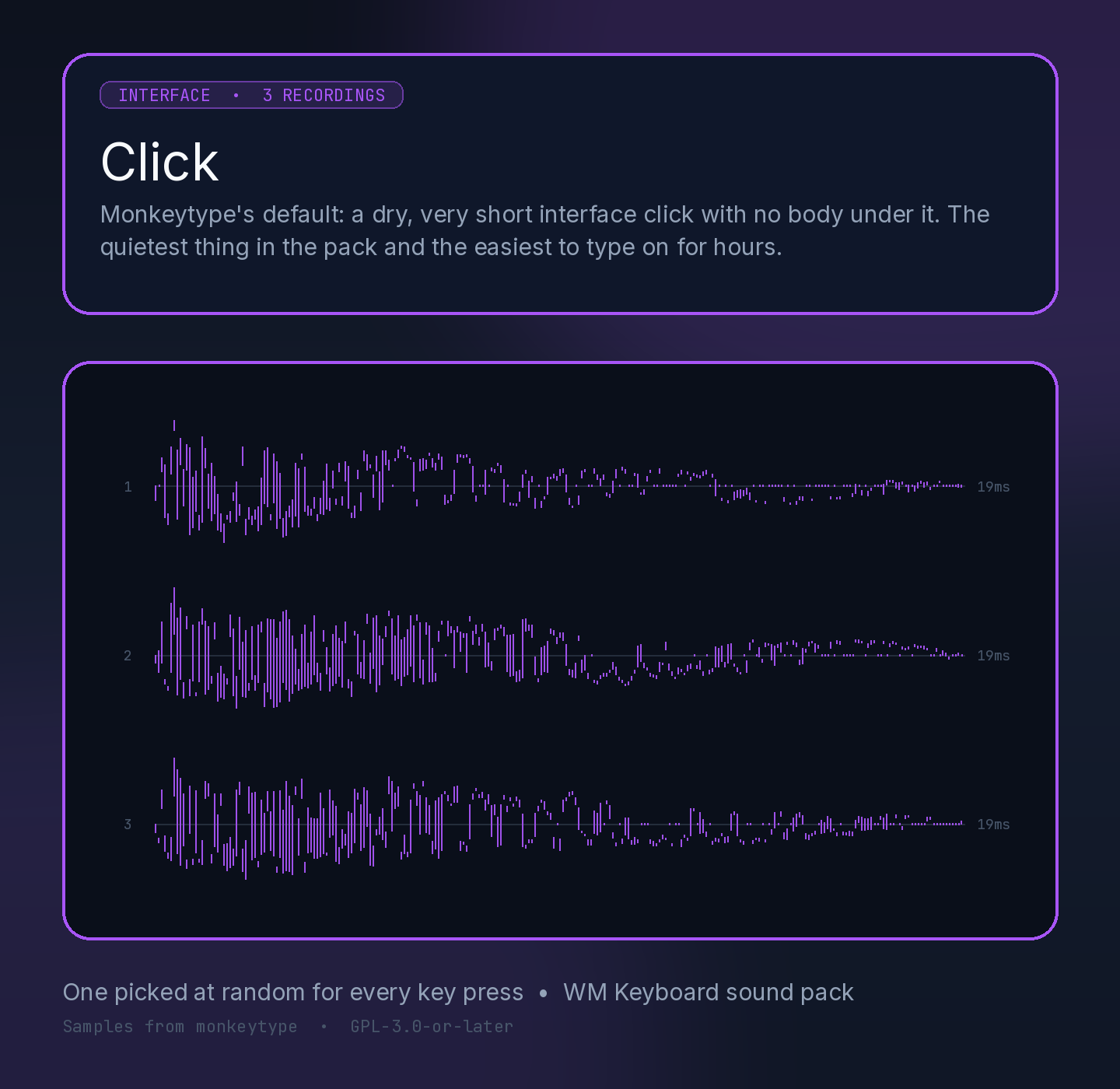
Click
Monkeytype's default: a dry, very short interface click with no body under it. The quietest thing in the pack and the easiest to type on for hours.
 WM Keyboard
Monkeytype's key sounds as WM Keyboard sound packs — every recording of each set, picked at random per keystroke, the way monkeytype plays them.
Monkeytype's default: a dry, very short interface click with no body under it. The quietest thing in the pack and the easiest to type on for hours.
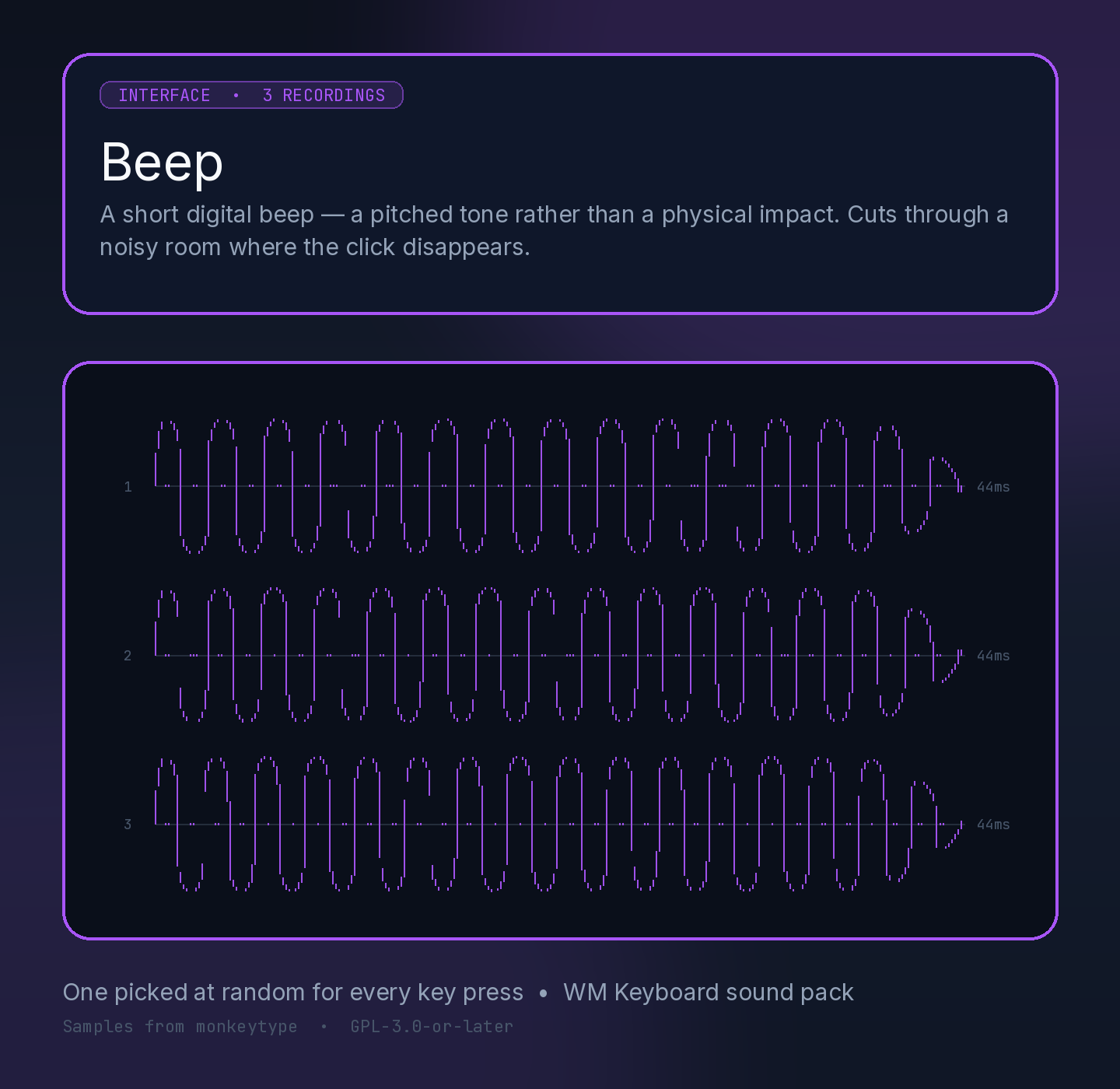
A short digital beep — a pitched tone rather than a physical impact. Cuts through a noisy room where the click disappears.
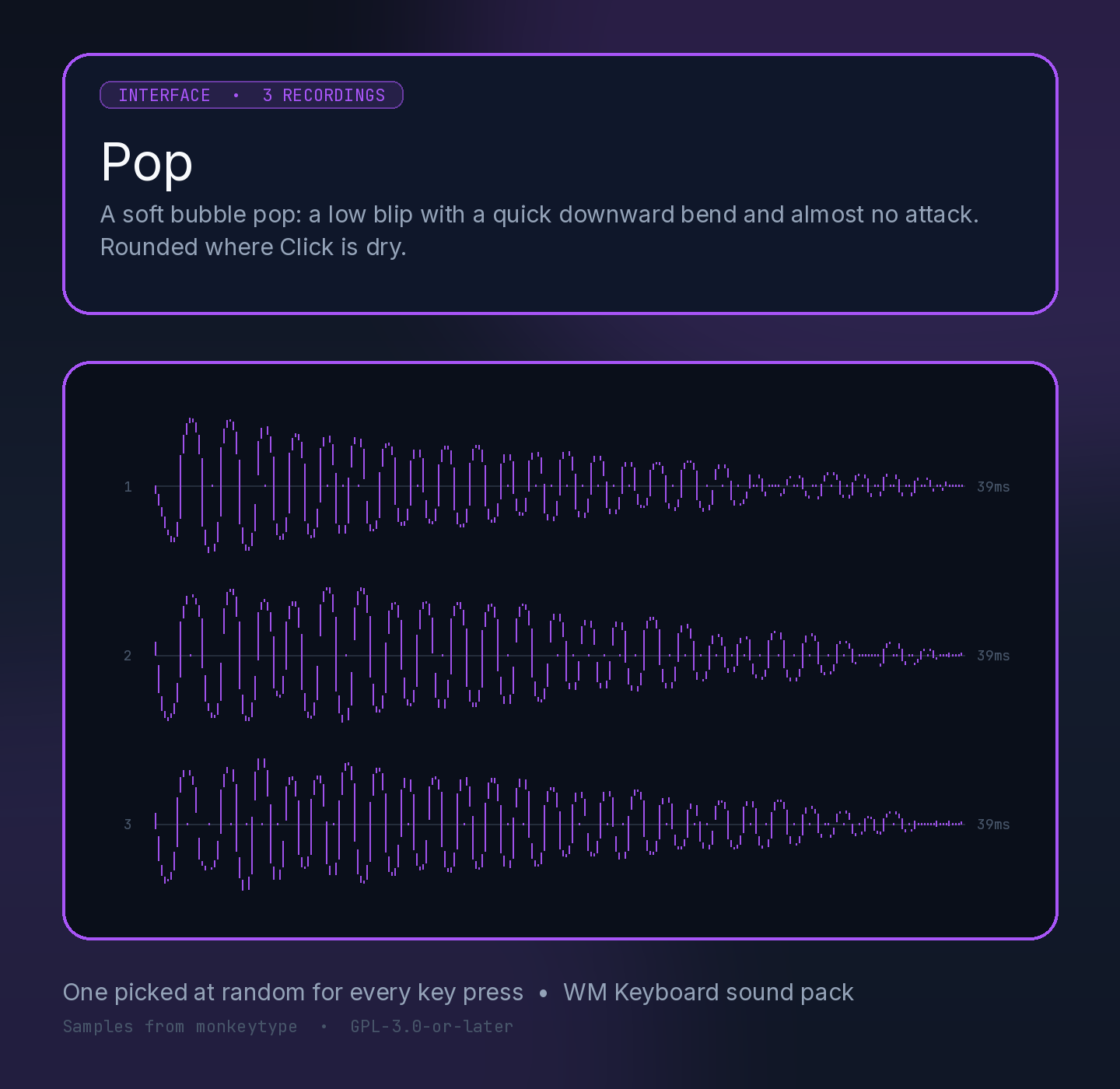
A soft bubble pop: a low blip with a quick downward bend and almost no attack. Rounded where Click is dry.
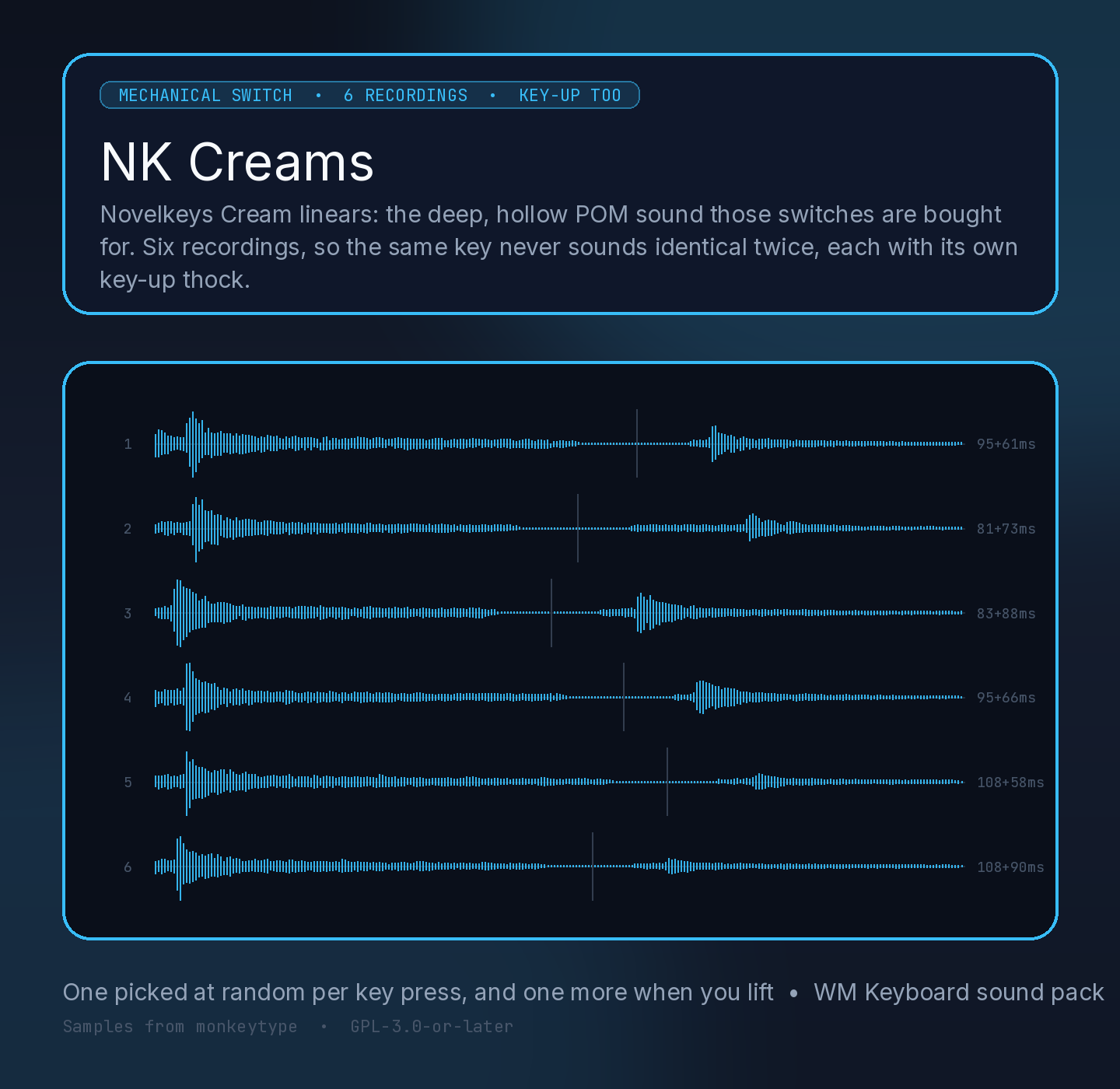
Novelkeys Cream linears: the deep, hollow POM sound those switches are bought for. Six recordings, so the same key never sounds identical twice, each with its own key-up thock.
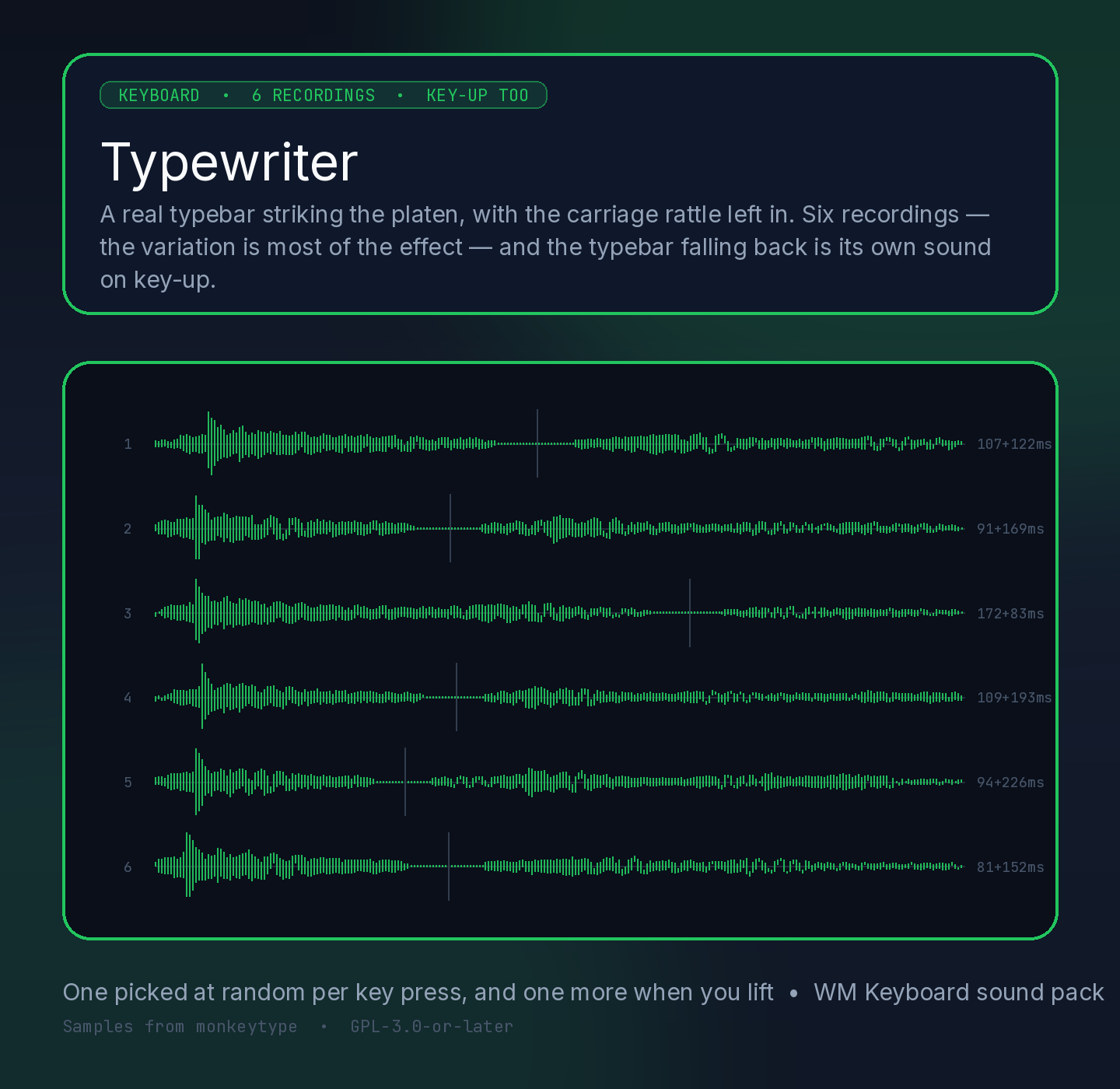
A real typebar striking the platen, with the carriage rattle left in. Six recordings — the variation is most of the effect — and the typebar falling back is its own sound on key-up.
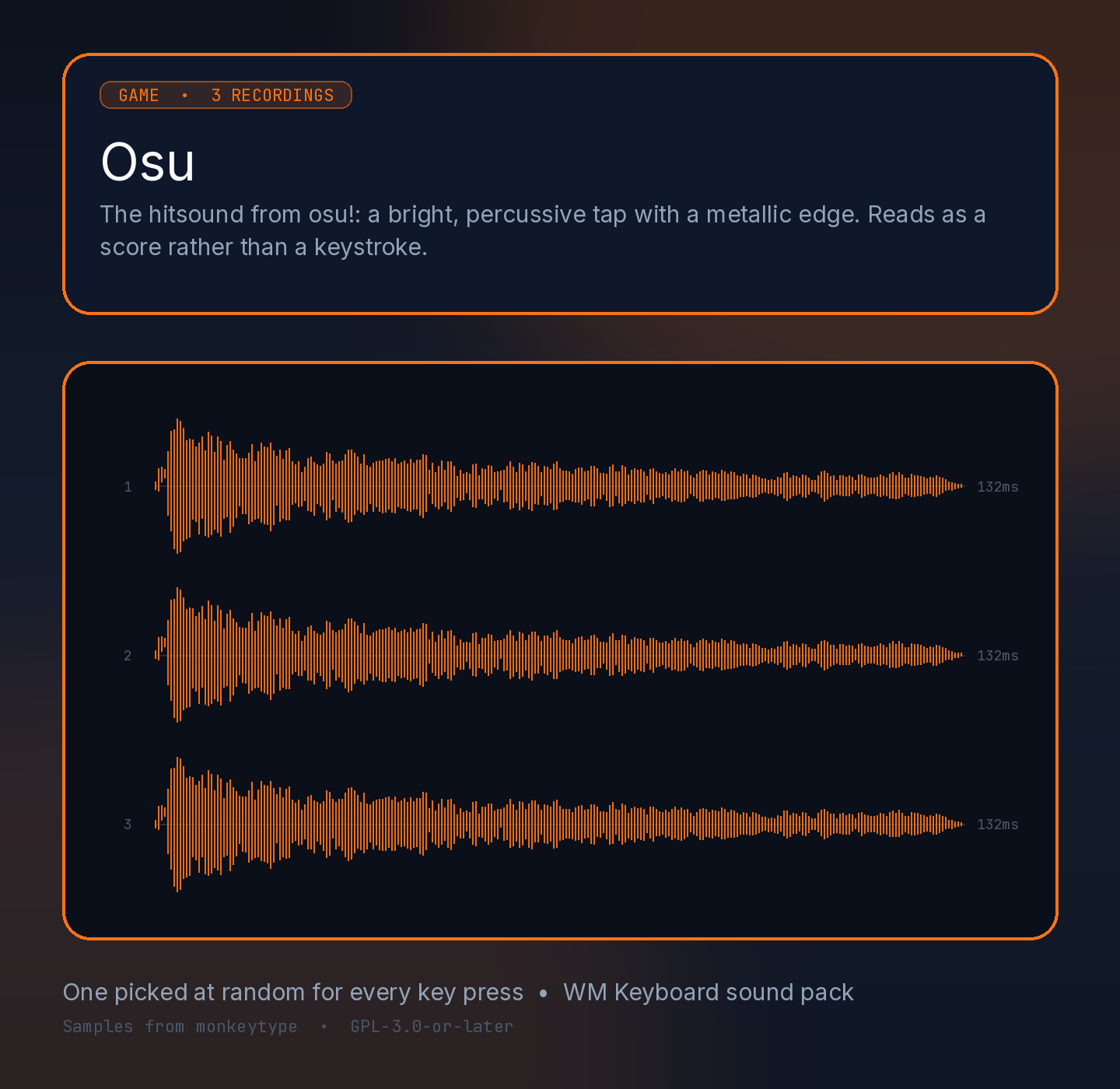
The hitsound from osu!: a bright, percussive tap with a metallic edge. Reads as a score rather than a keystroke.
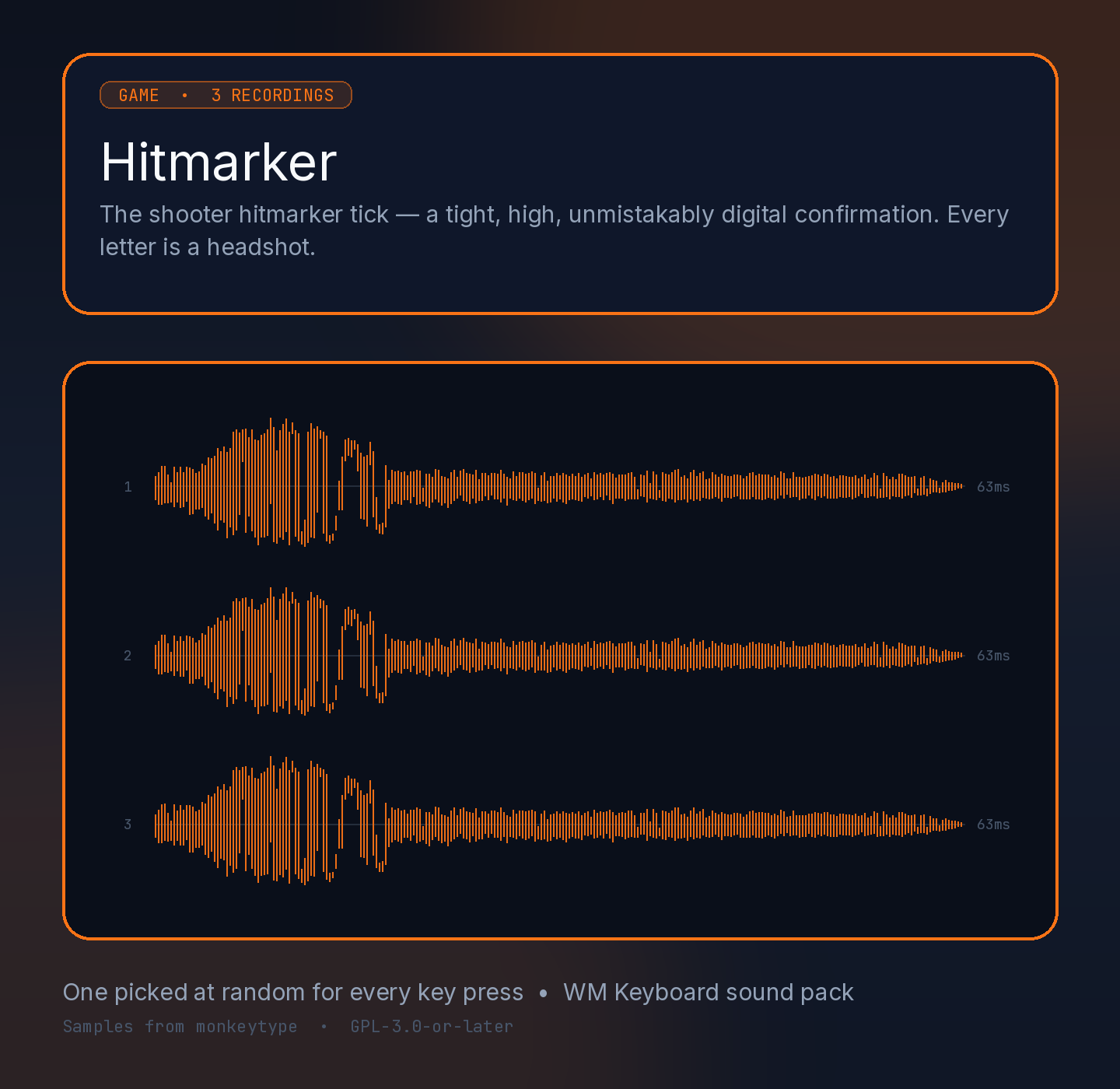
The shooter hitmarker tick — a tight, high, unmistakably digital confirmation. Every letter is a headshot.
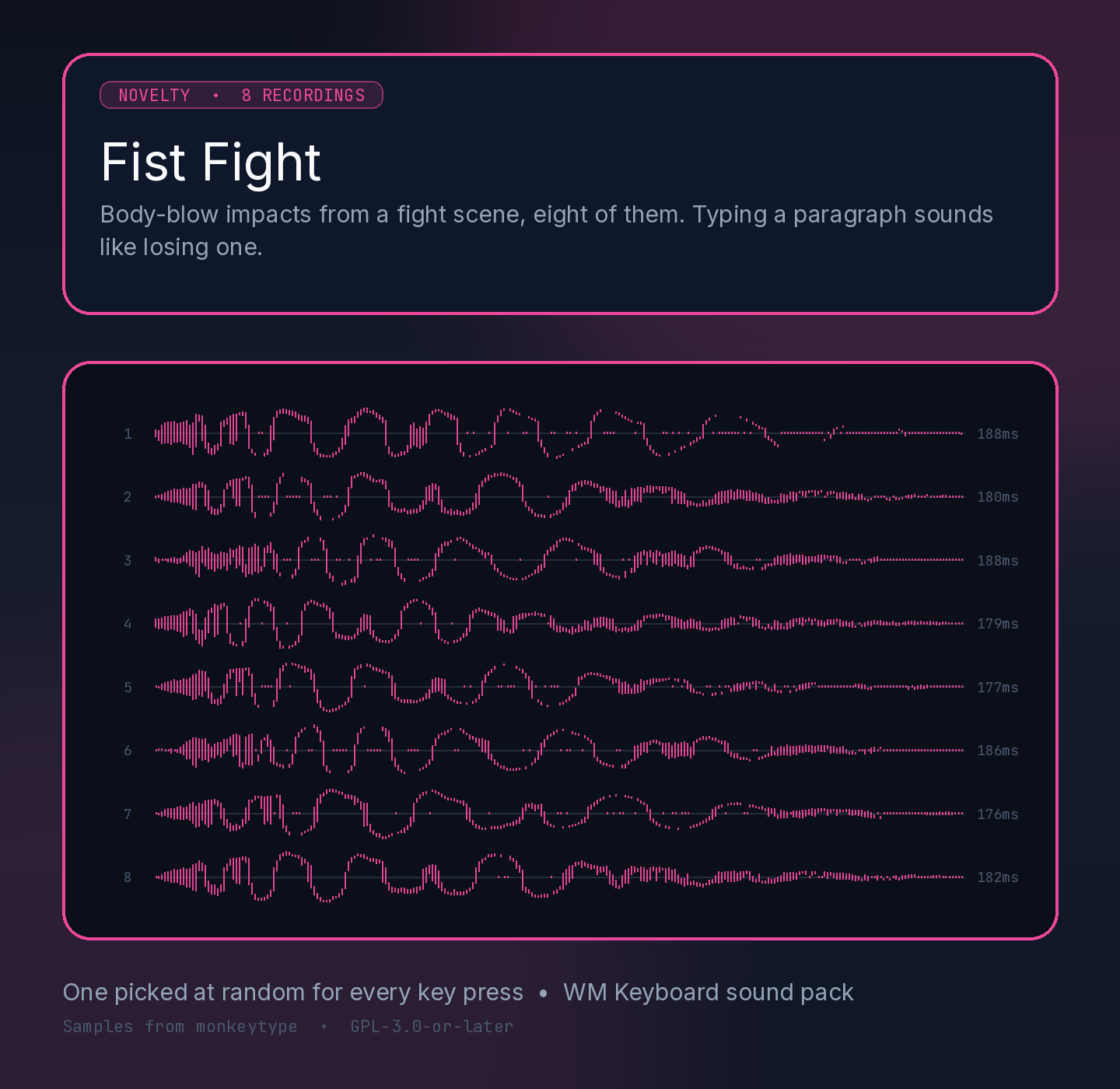
Body-blow impacts from a fight scene, eight of them. Typing a paragraph sounds like losing one.
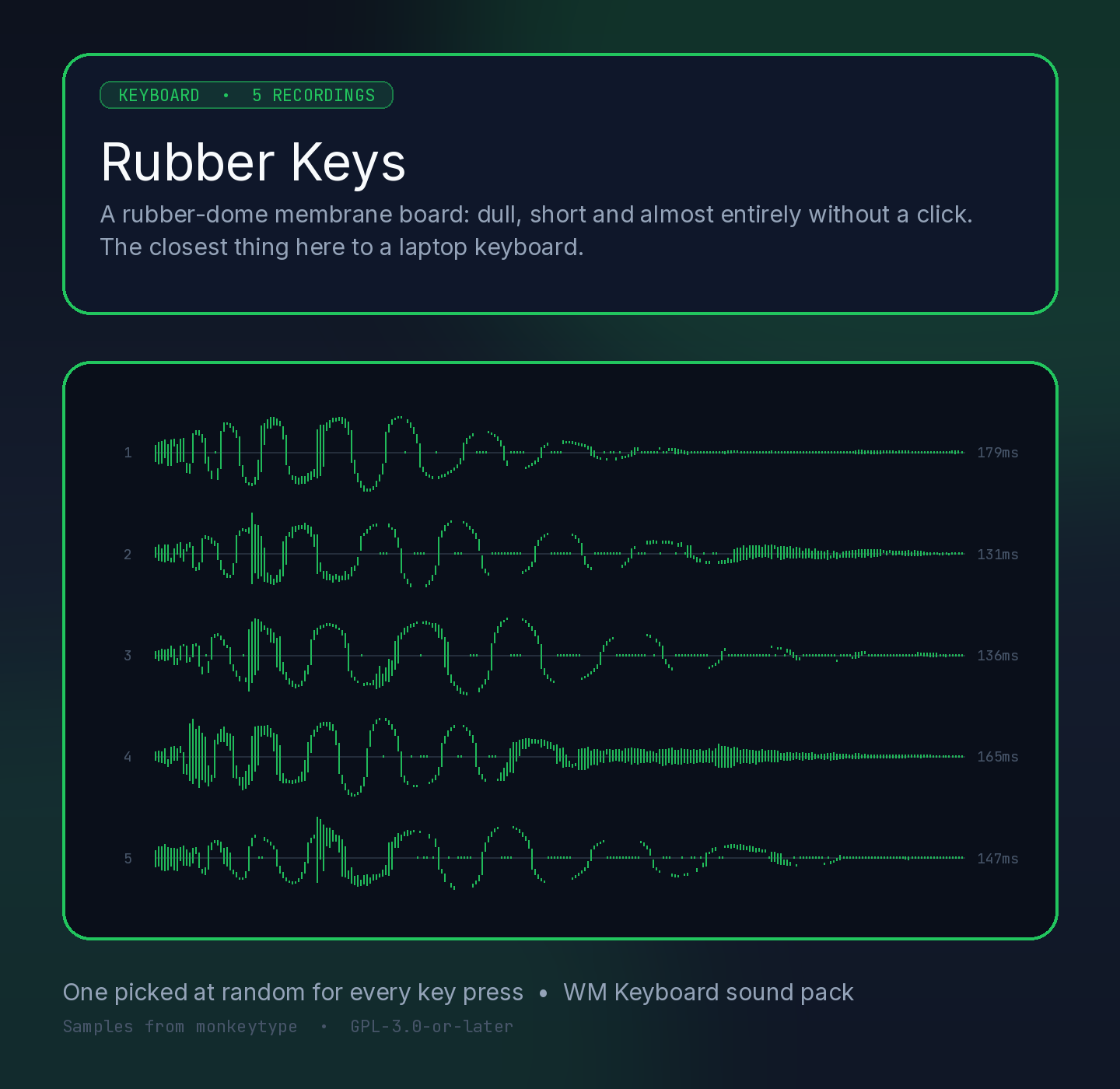
A rubber-dome membrane board: dull, short and almost entirely without a click. The closest thing here to a laptop keyboard.
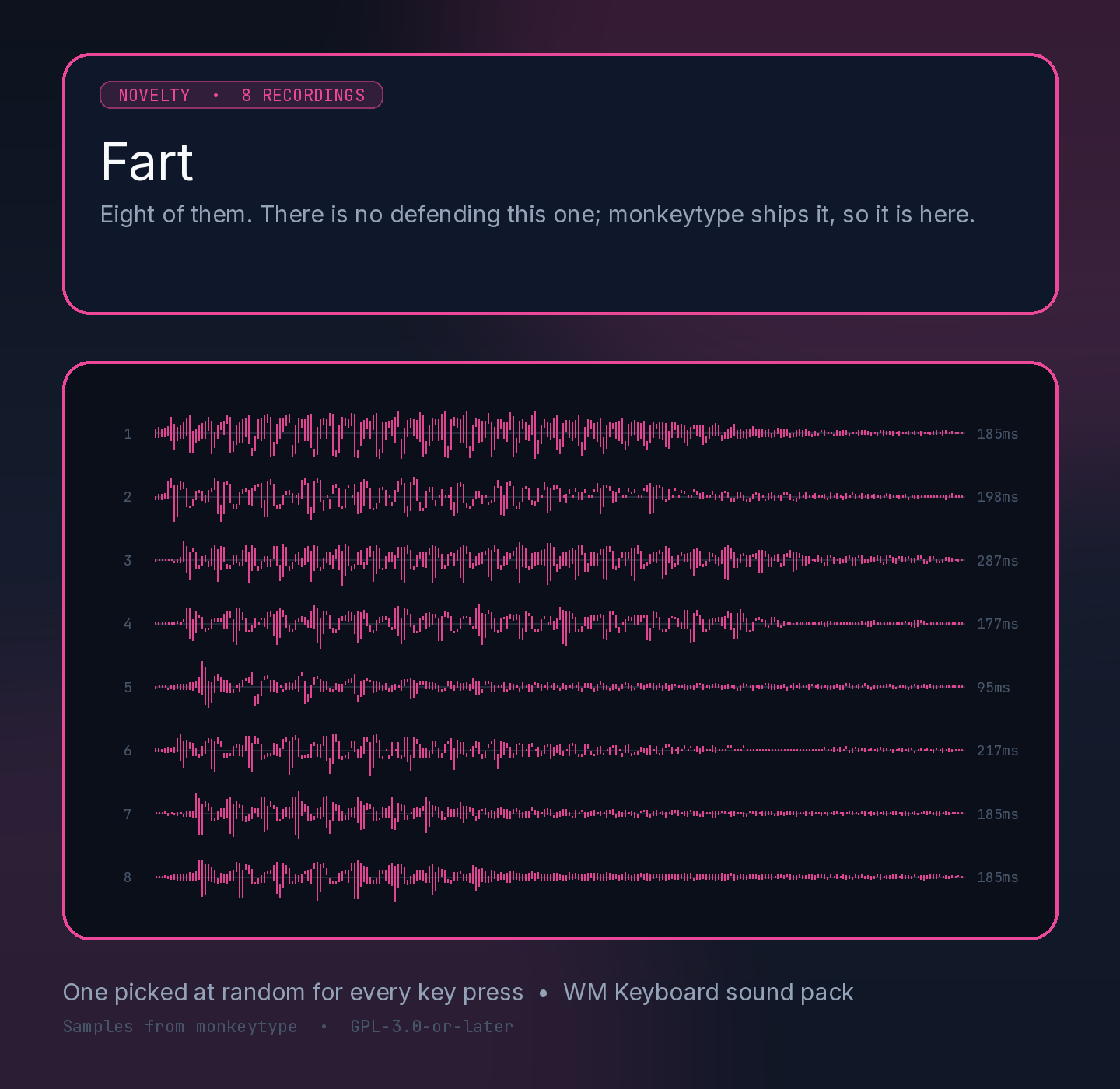
Eight of them. There is no defending this one; monkeytype ships it, so it is here.
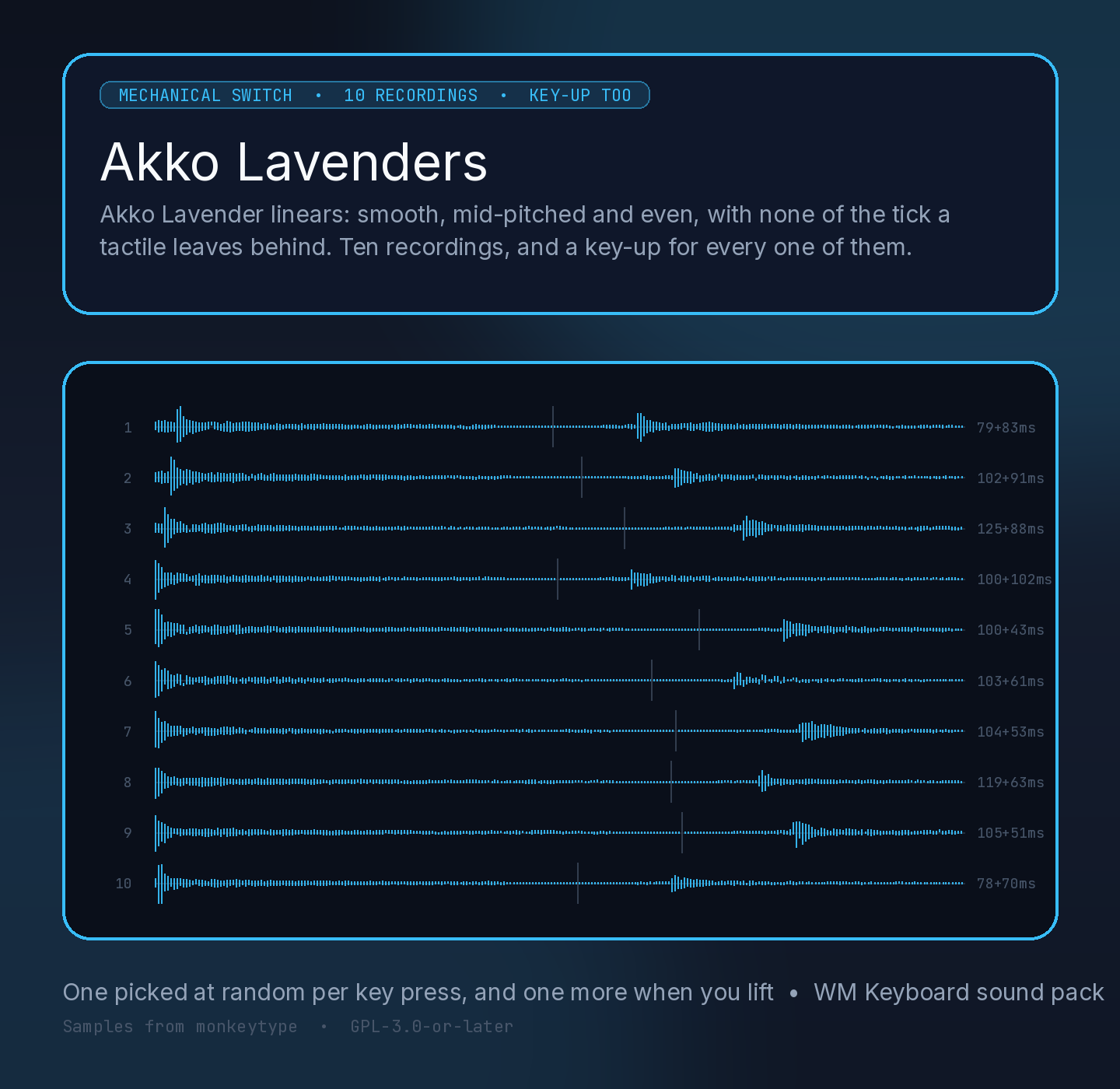
Akko Lavender linears: smooth, mid-pitched and even, with none of the tick a tactile leaves behind. Ten recordings, and a key-up for every one of them.
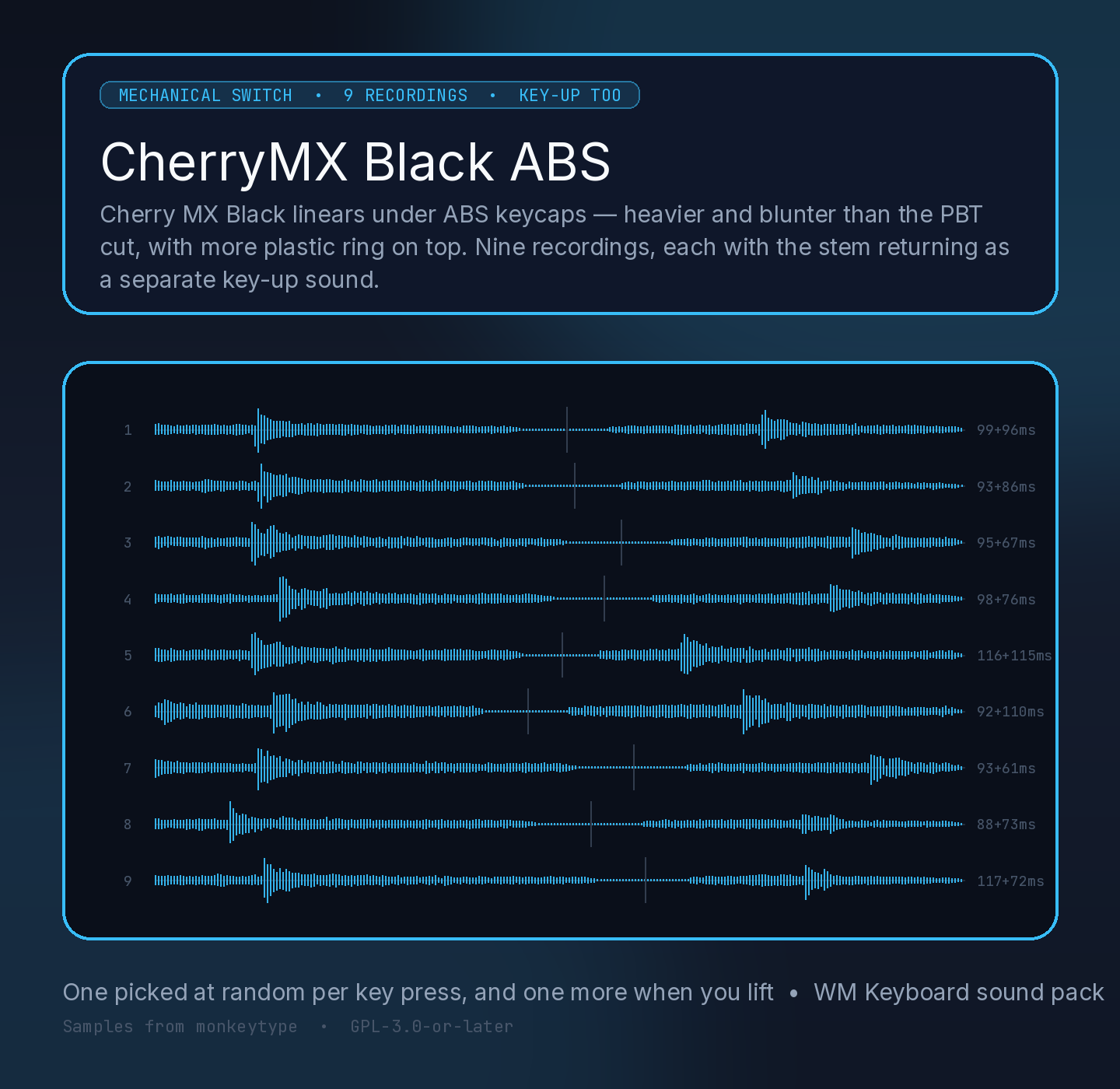
Cherry MX Black linears under ABS keycaps — heavier and blunter than the PBT cut, with more plastic ring on top. Nine recordings, each with the stem returning as a separate key-up sound.
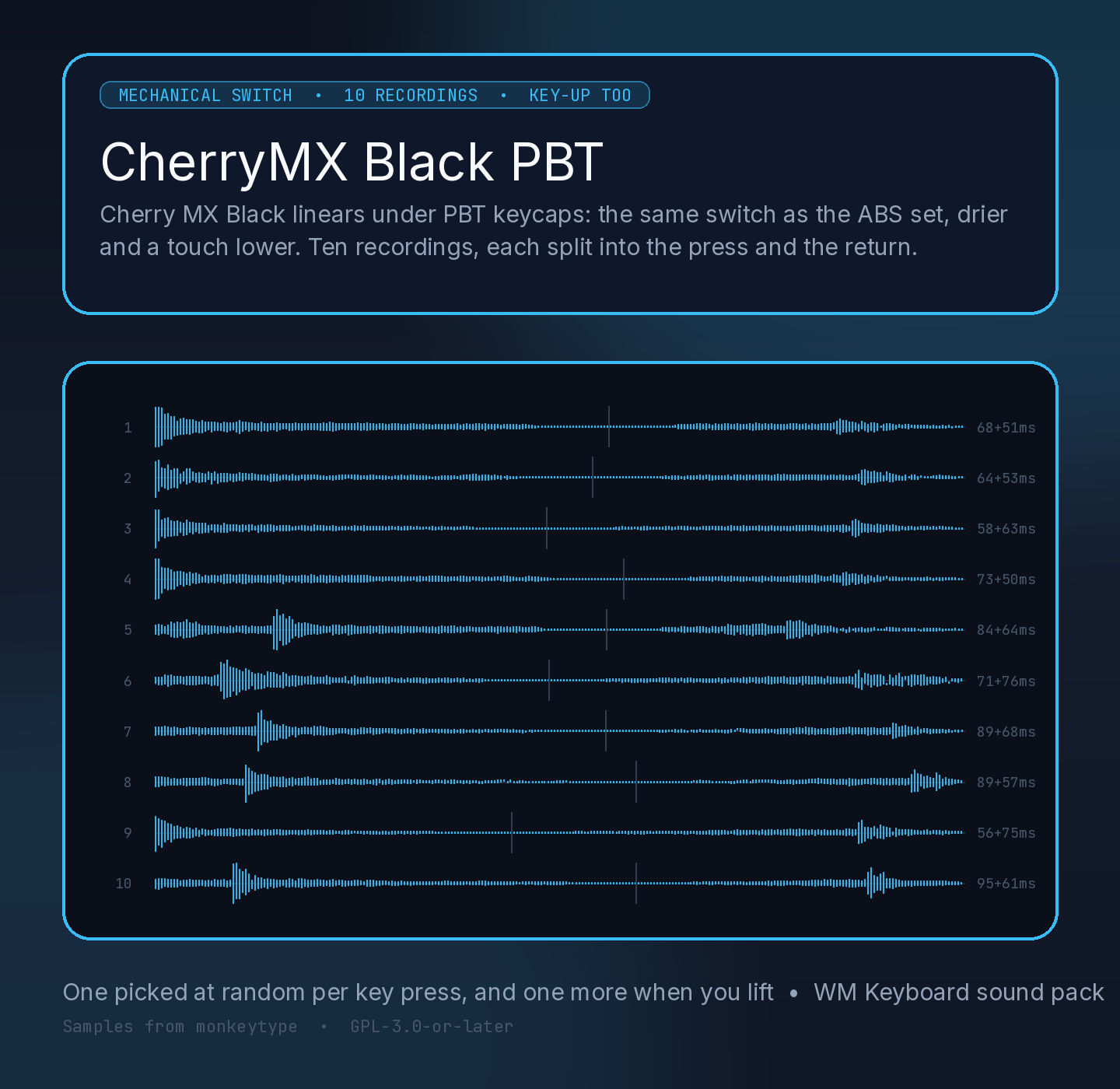
Cherry MX Black linears under PBT keycaps: the same switch as the ABS set, drier and a touch lower. Ten recordings, each split into the press and the return.
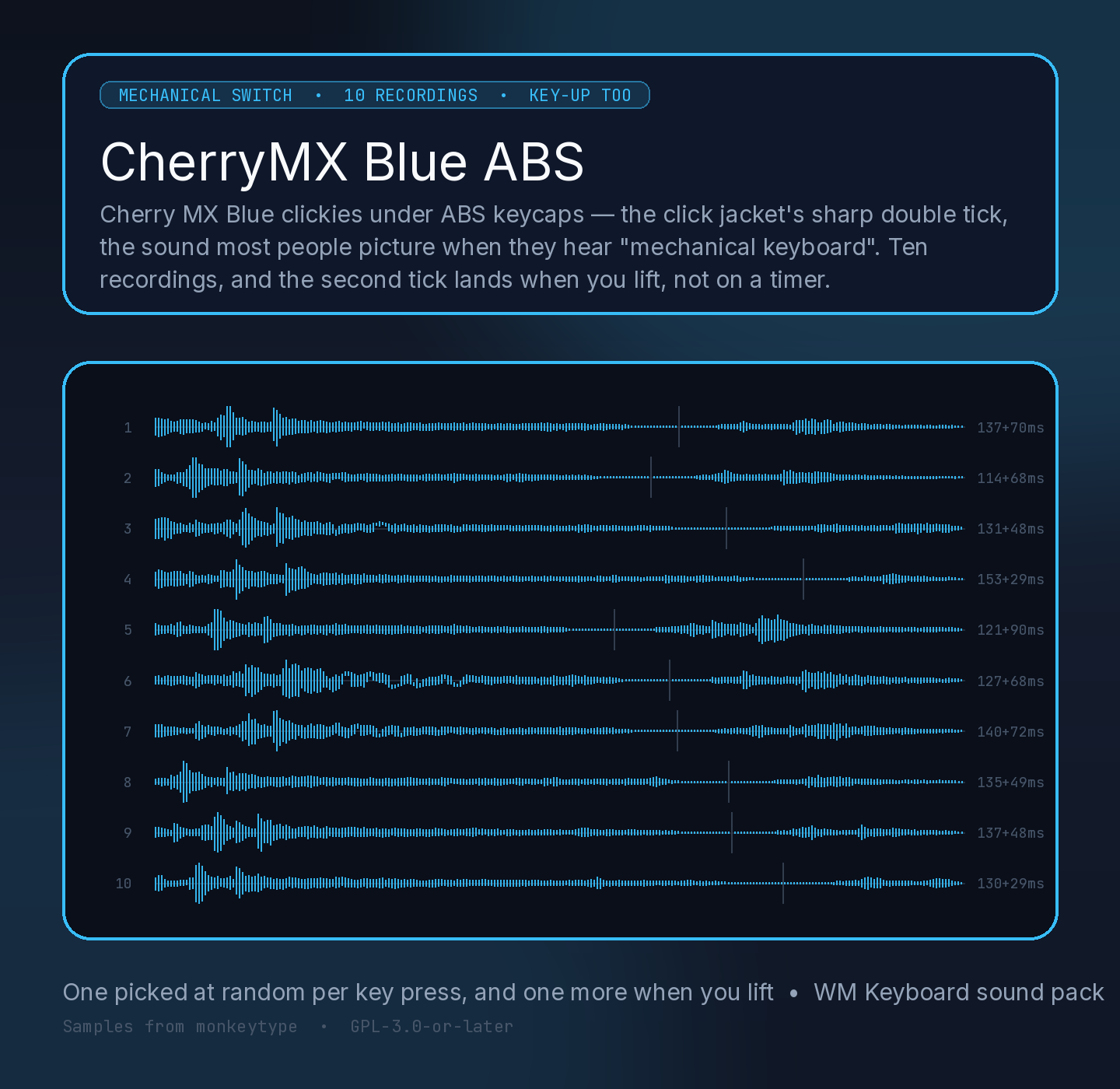
Cherry MX Blue clickies under ABS keycaps — the click jacket's sharp double tick, the sound most people picture when they hear "mechanical keyboard". Ten recordings, and the second tick lands when you lift, not on a timer.
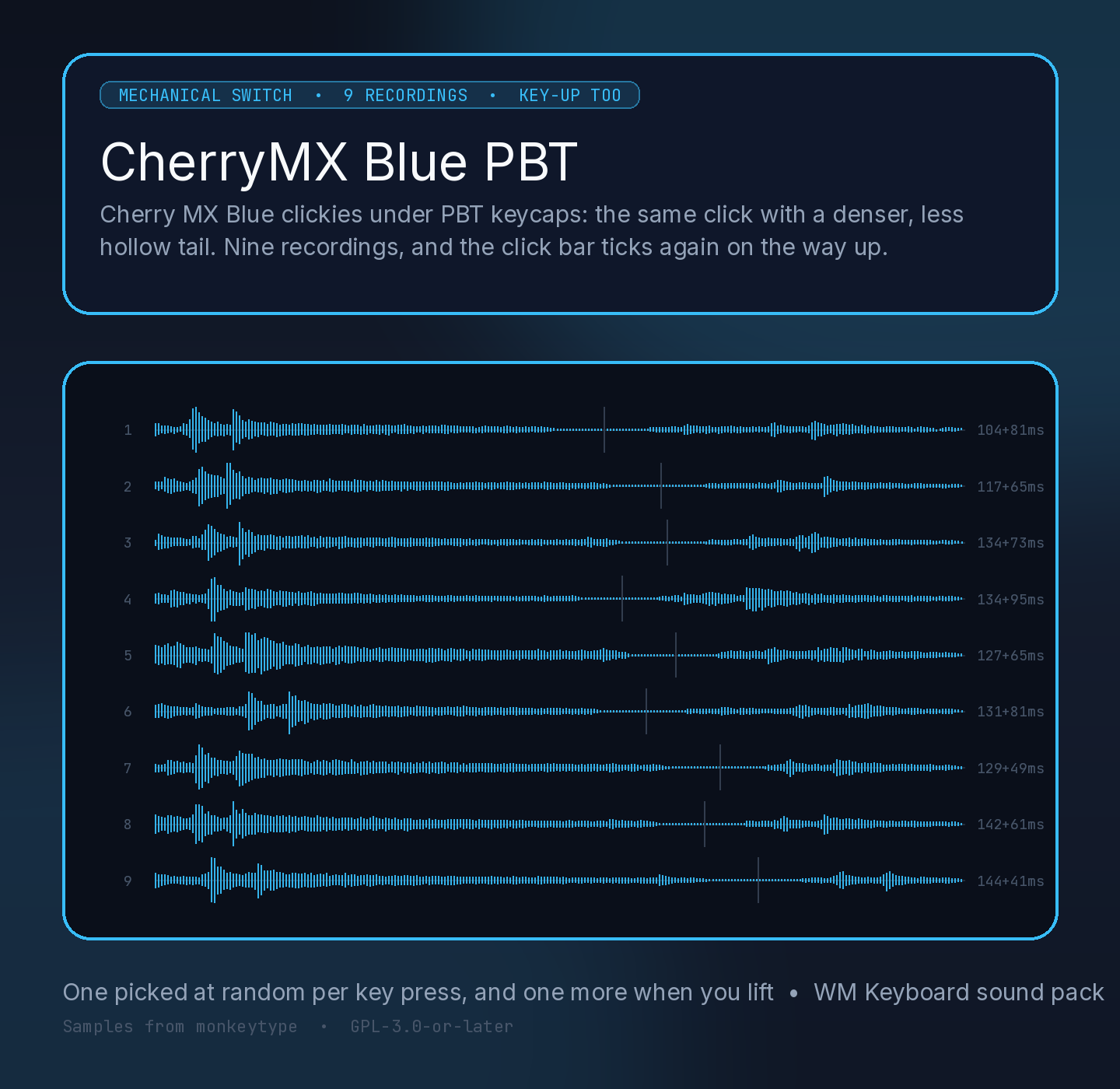
Cherry MX Blue clickies under PBT keycaps: the same click with a denser, less hollow tail. Nine recordings, and the click bar ticks again on the way up.
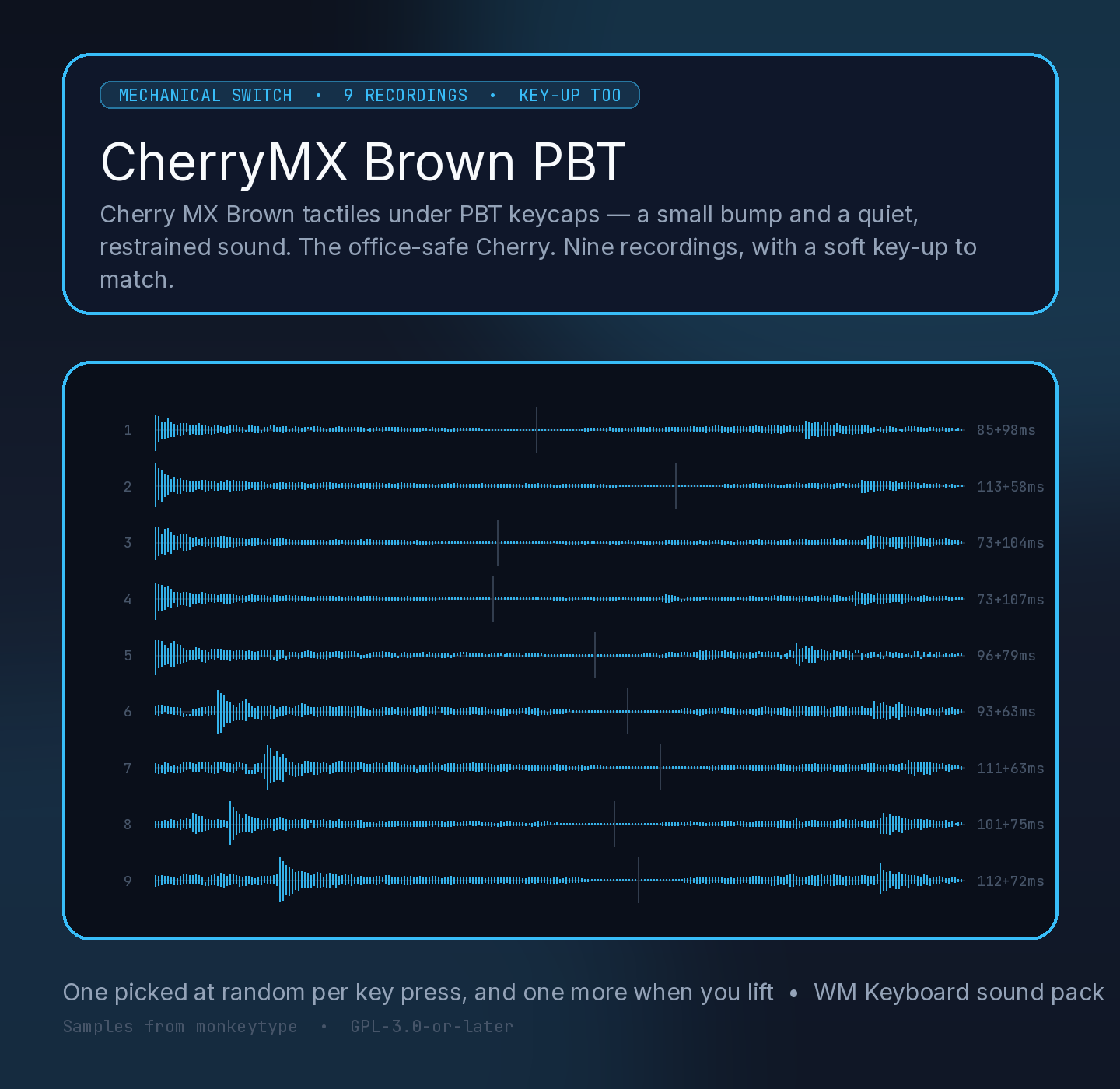
Cherry MX Brown tactiles under PBT keycaps — a small bump and a quiet, restrained sound. The office-safe Cherry. Nine recordings, with a soft key-up to match.
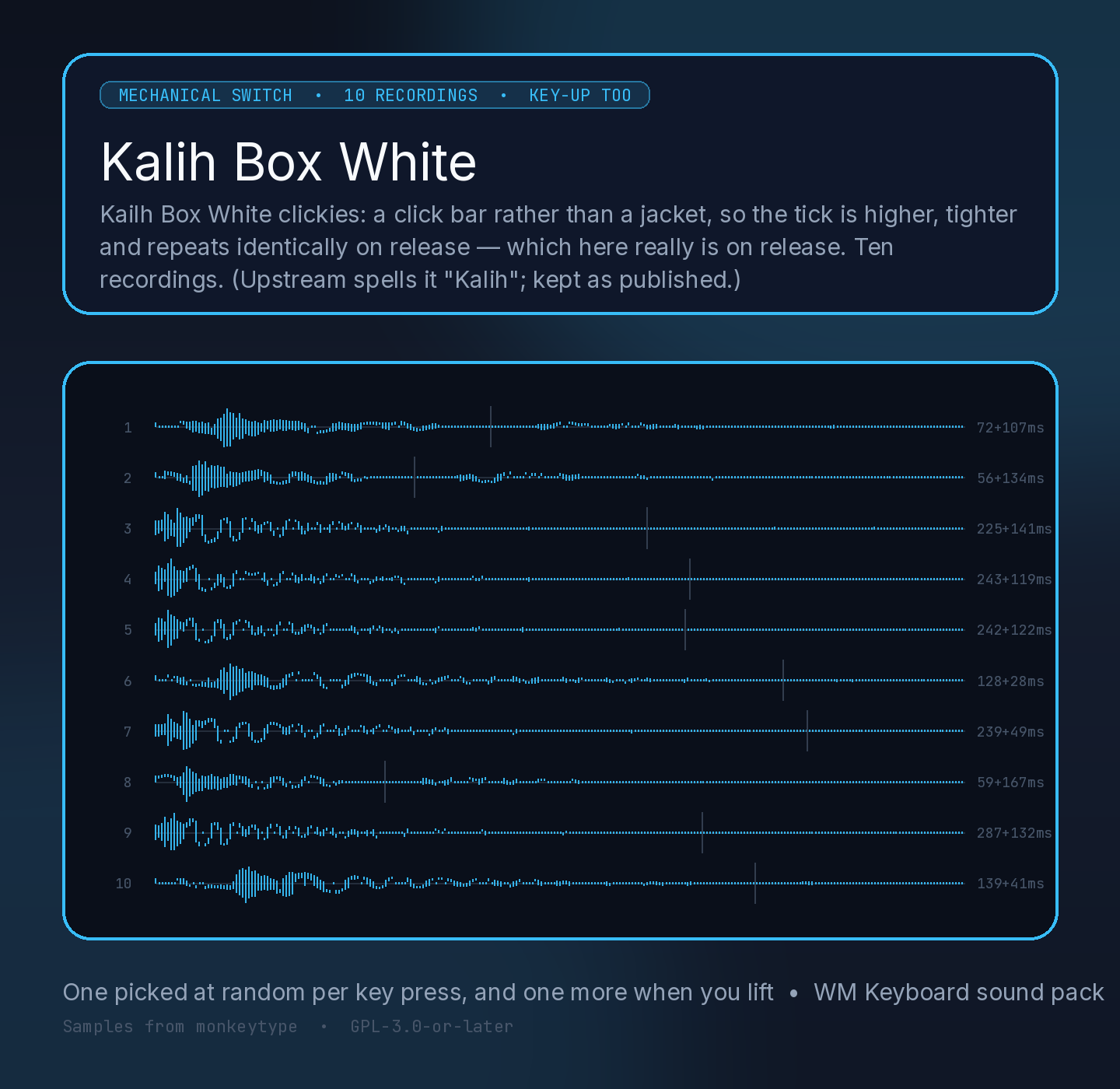
Kailh Box White clickies: a click bar rather than a jacket, so the tick is higher, tighter and repeats identically on release — which here really is on release. Ten recordings. (Upstream spells it "Kalih"; kept as published.)
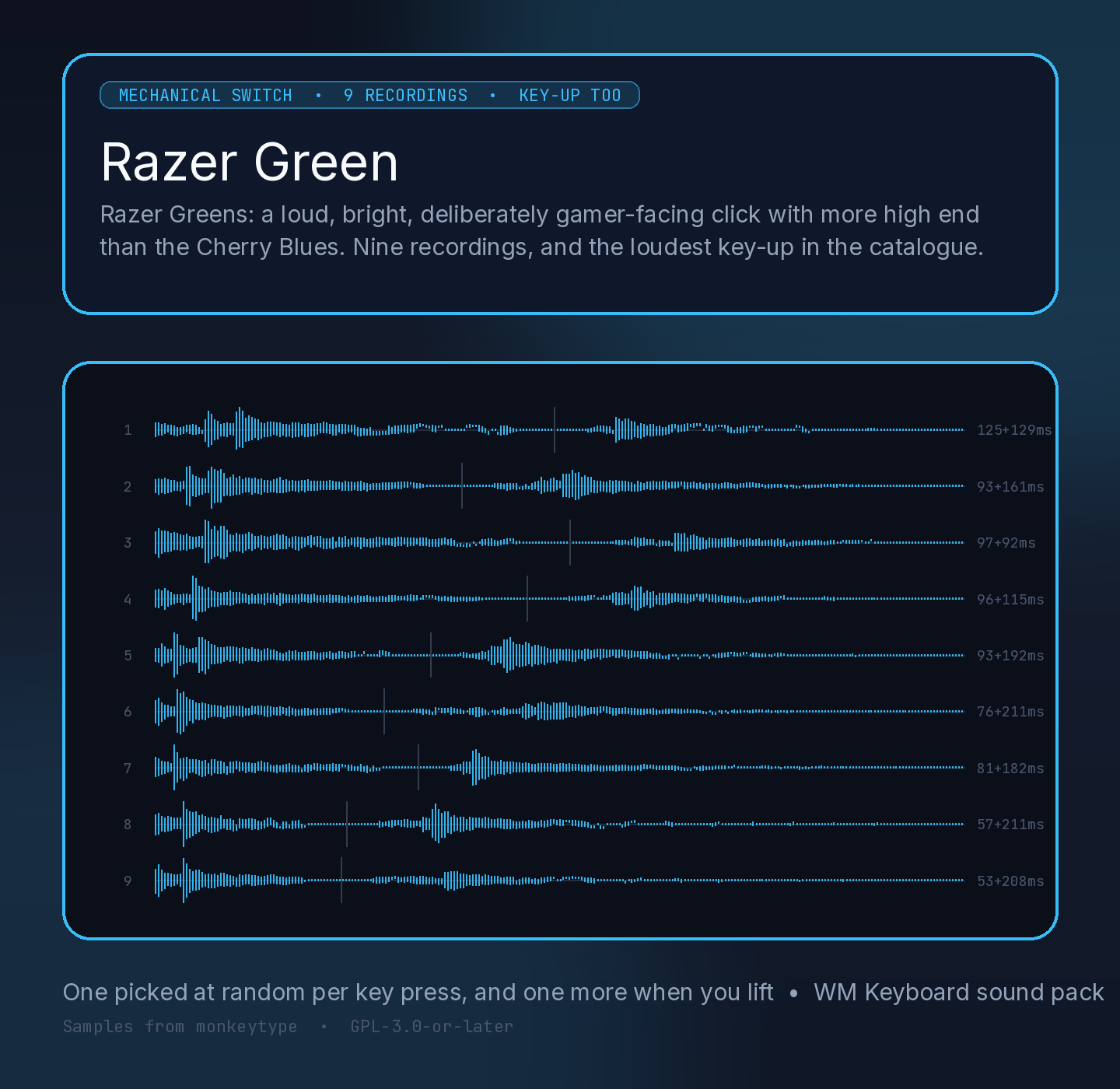
Razer Greens: a loud, bright, deliberately gamer-facing click with more high end than the Cherry Blues. Nine recordings, and the loudest key-up in the catalogue.
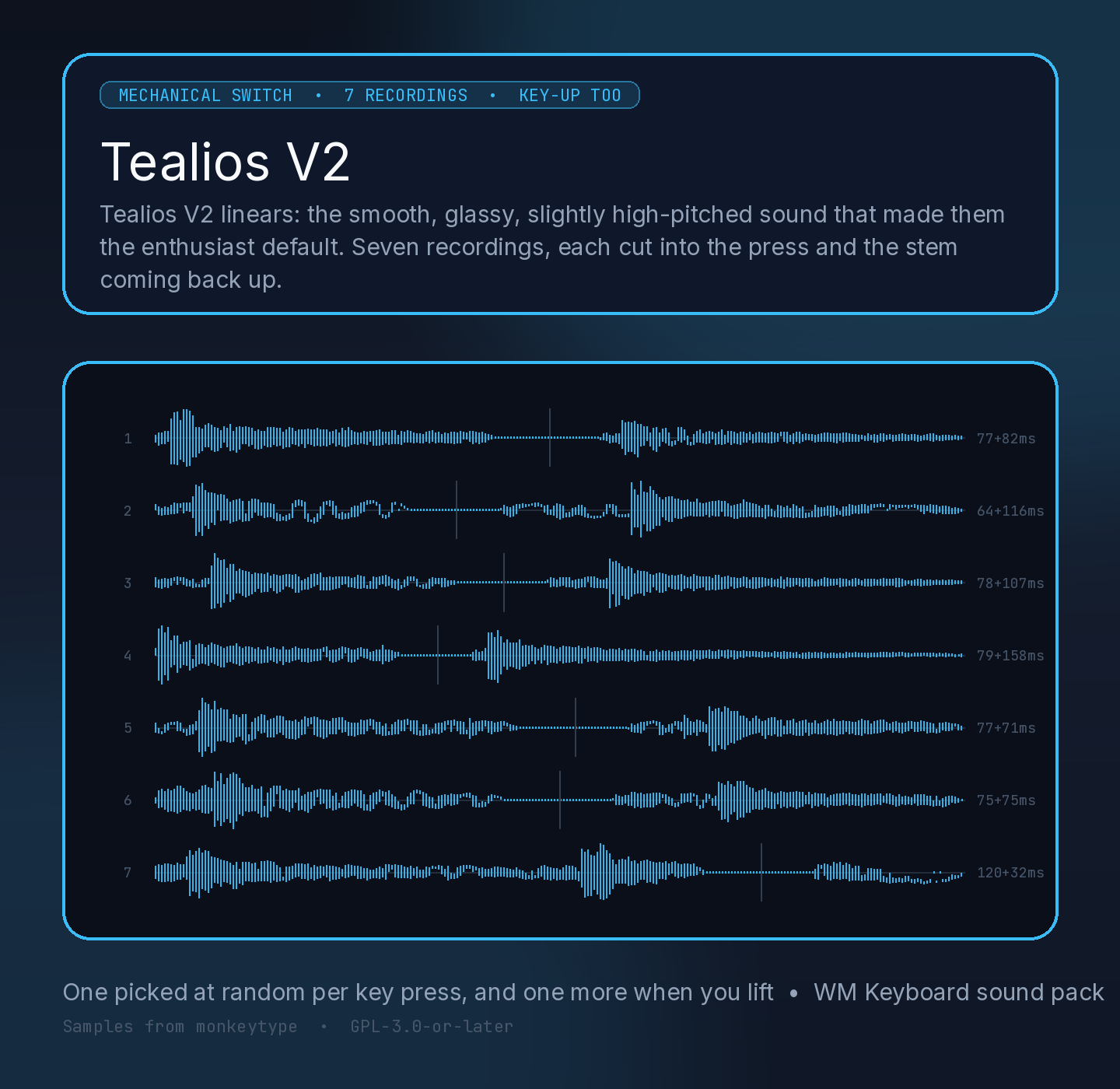
Tealios V2 linears: the smooth, glassy, slightly high-pitched sound that made them the enthusiast default. Seven recordings, each cut into the press and the stem coming back up.
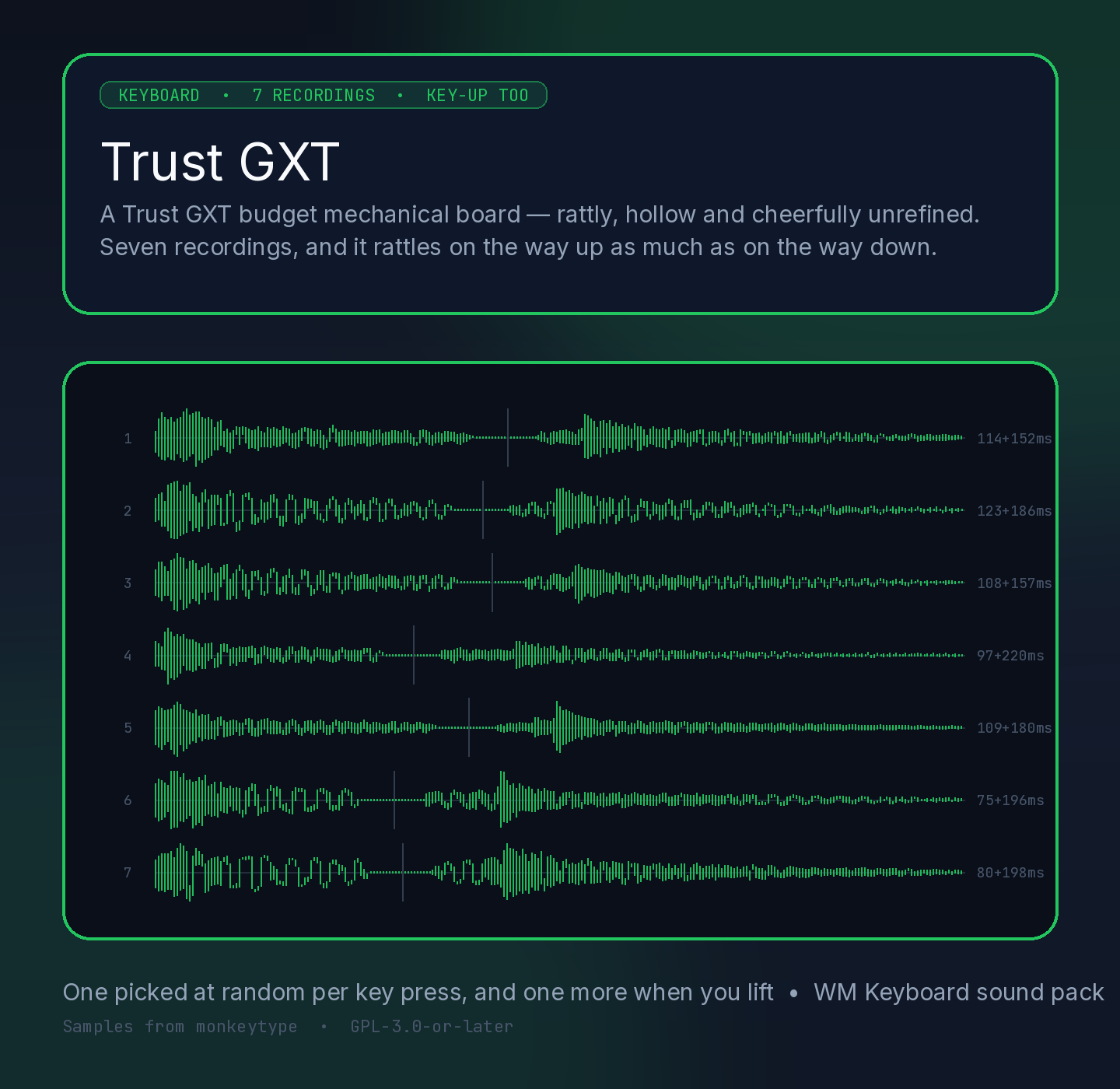
A Trust GXT budget mechanical board — rattly, hollow and cheerfully unrefined. Seven recordings, and it rattles on the way up as much as on the way down.
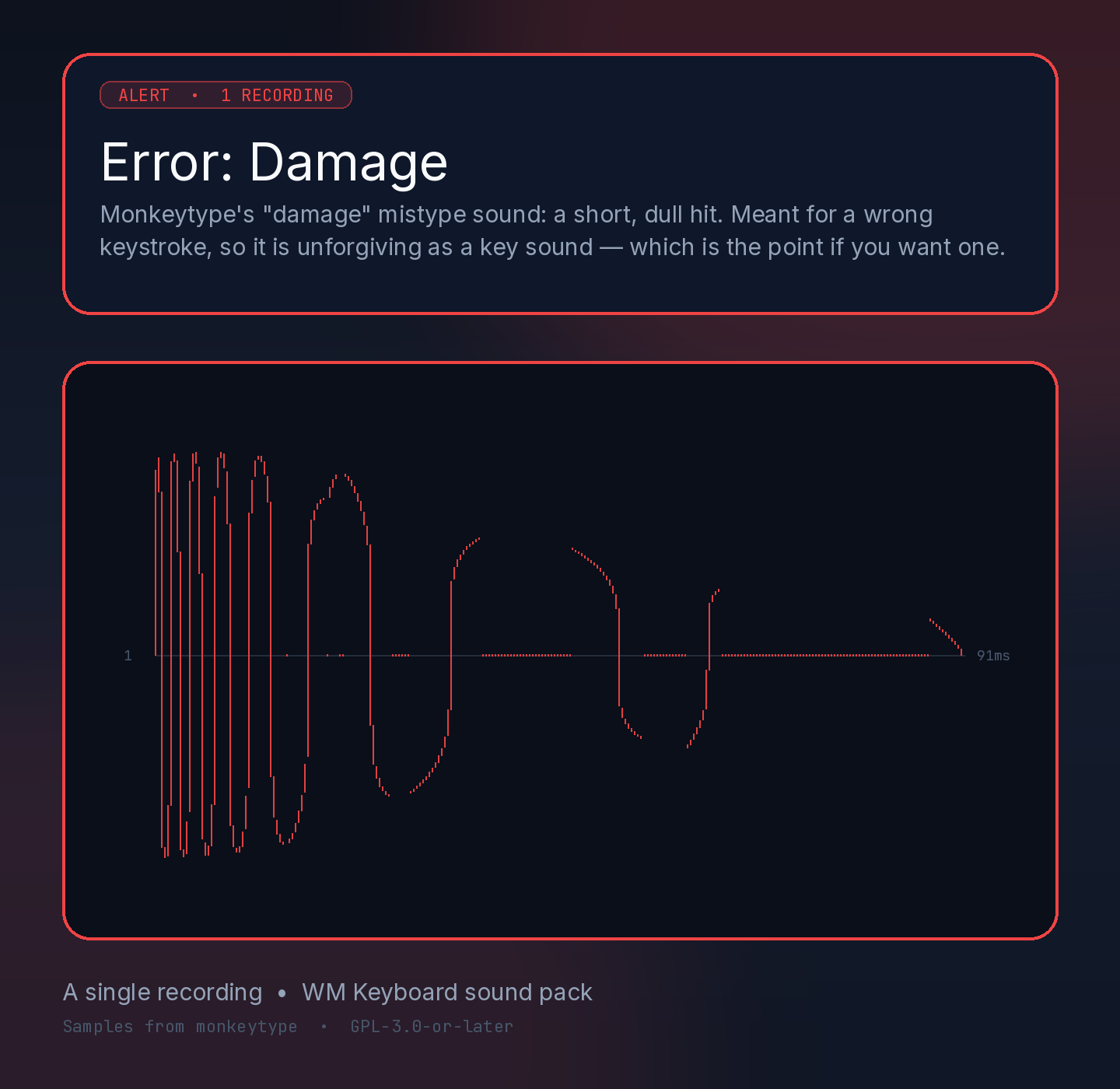
Monkeytype's "damage" mistype sound: a short, dull hit. Meant for a wrong keystroke, so it is unforgiving as a key sound — which is the point if you want one.
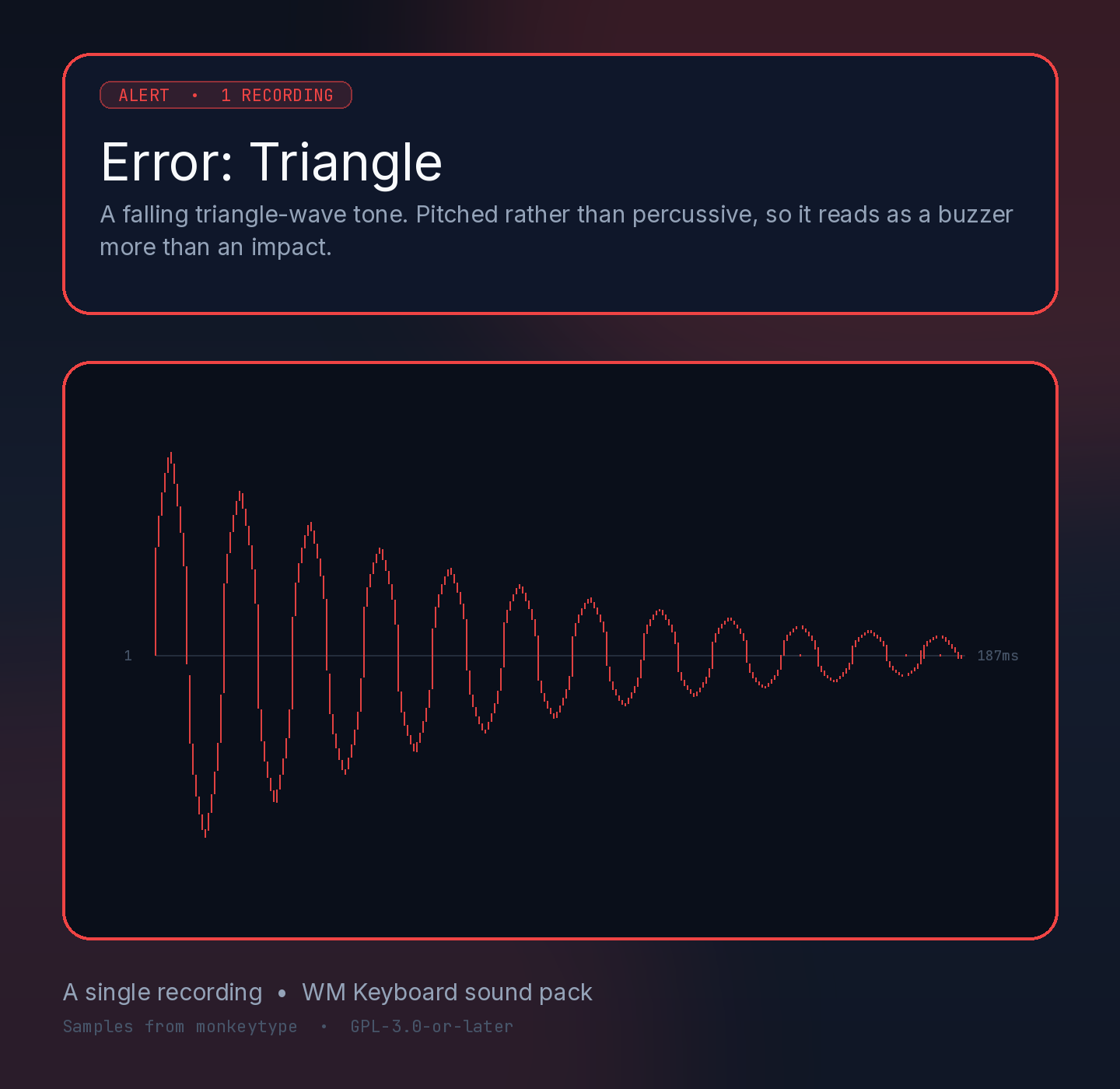
A falling triangle-wave tone. Pitched rather than percussive, so it reads as a buzzer more than an impact.
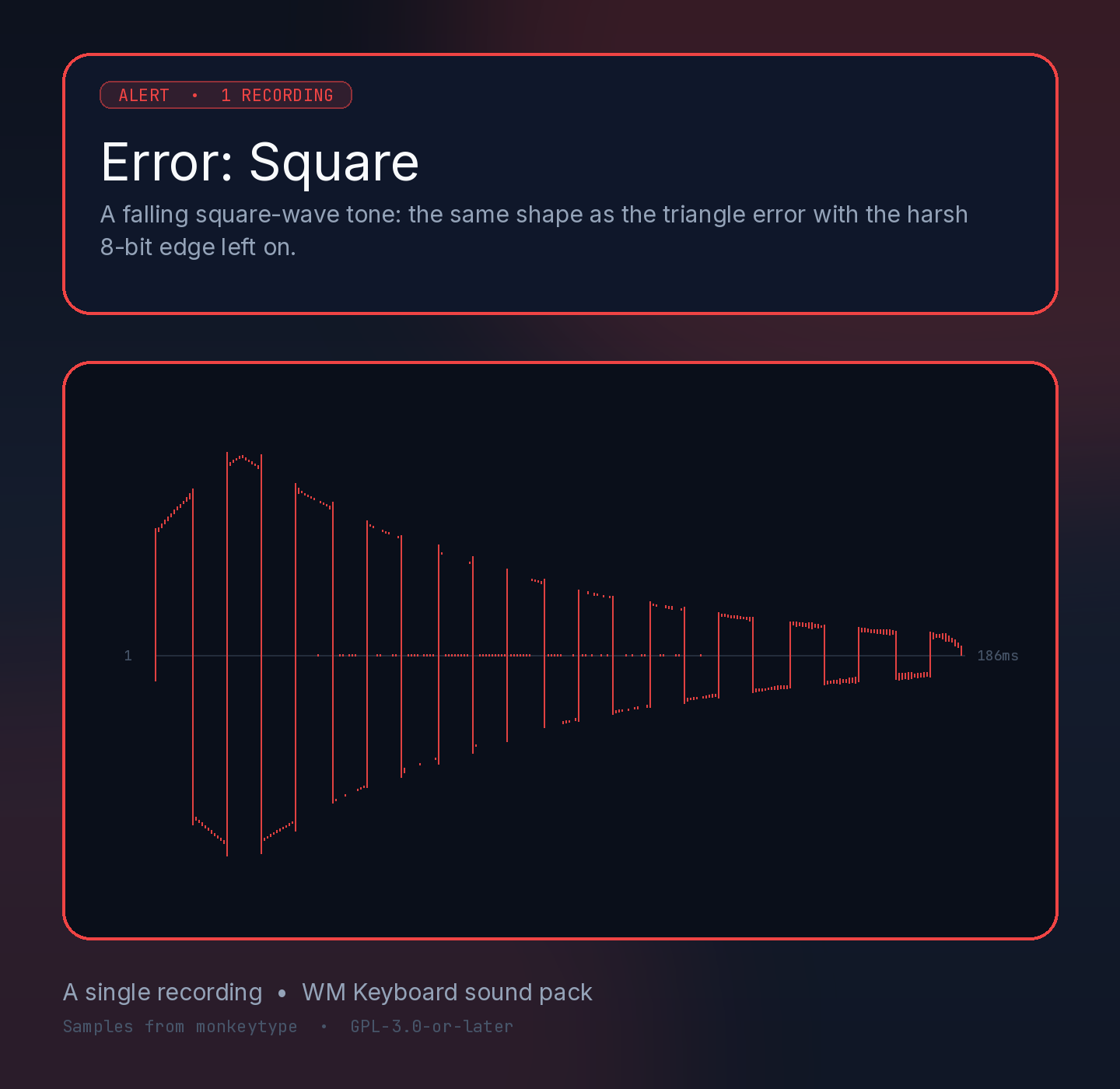
A falling square-wave tone: the same shape as the triangle error with the harsh 8-bit edge left on.
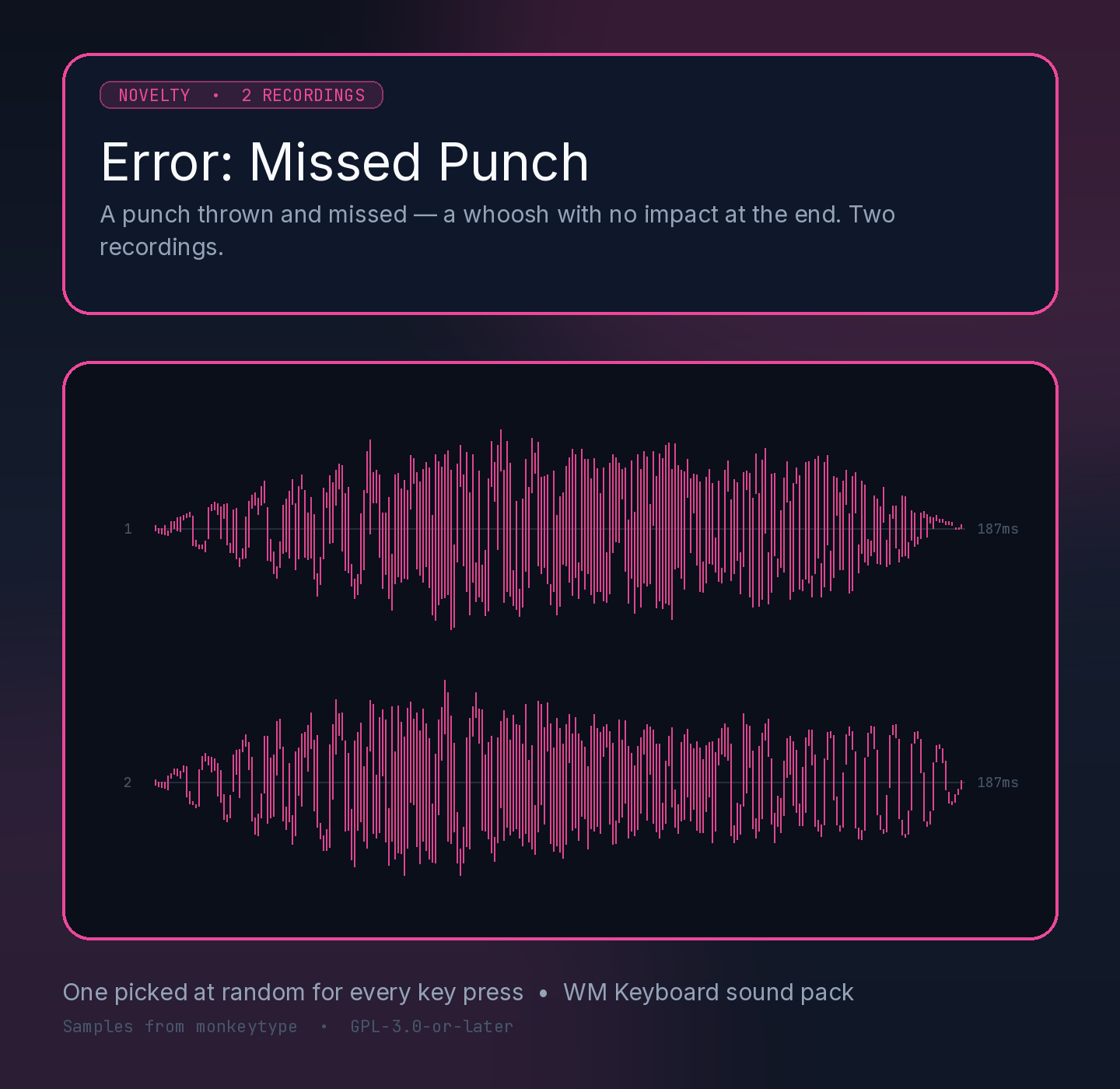
A punch thrown and missed — a whoosh with no impact at the end. Two recordings.
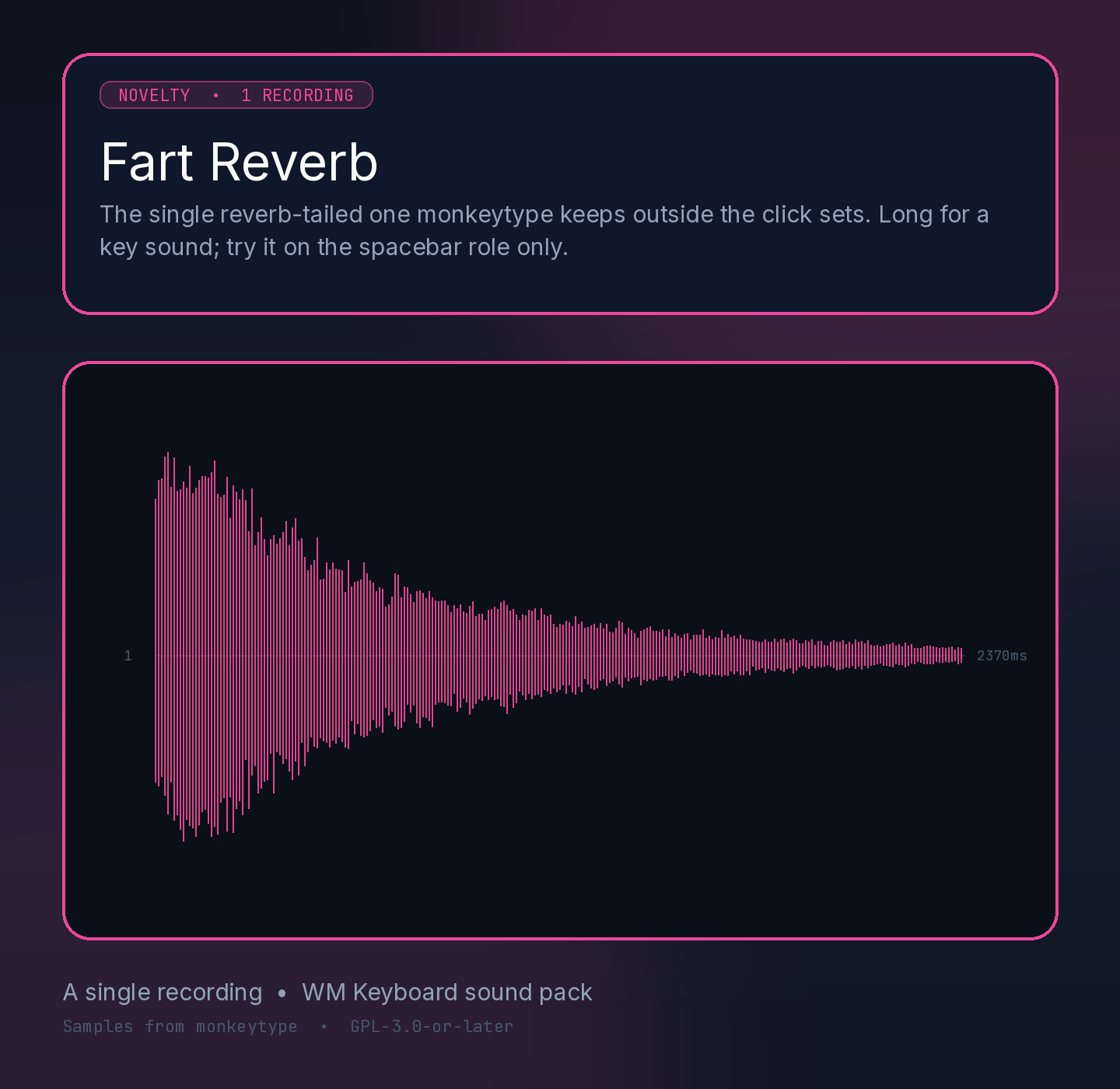
The single reverb-tailed one monkeytype keeps outside the click sets. Long for a key sound; try it on the spacebar role only.
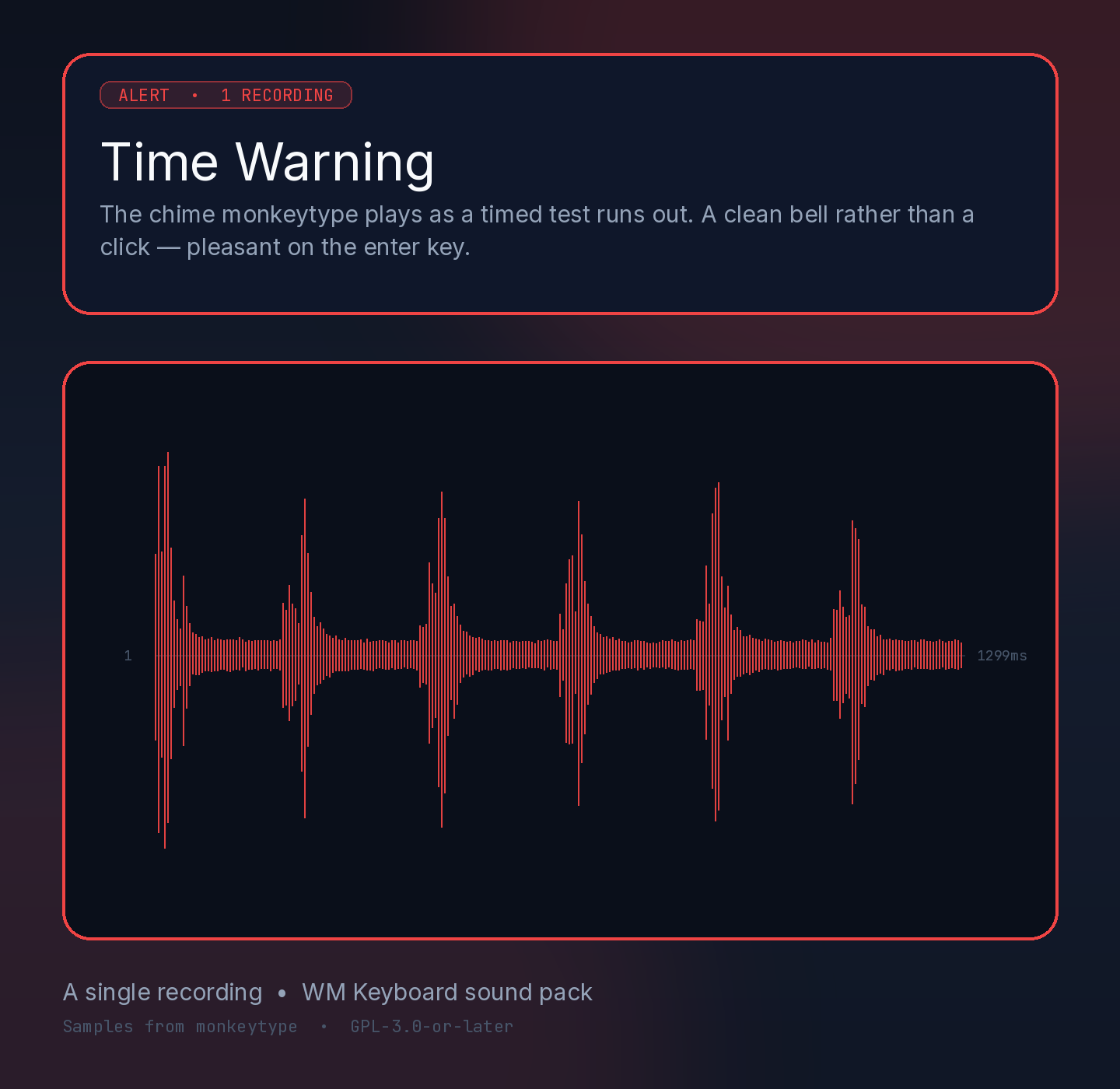
The chime monkeytype plays as a timed test runs out. A clean bell rather than a click — pleasant on the enter key.